
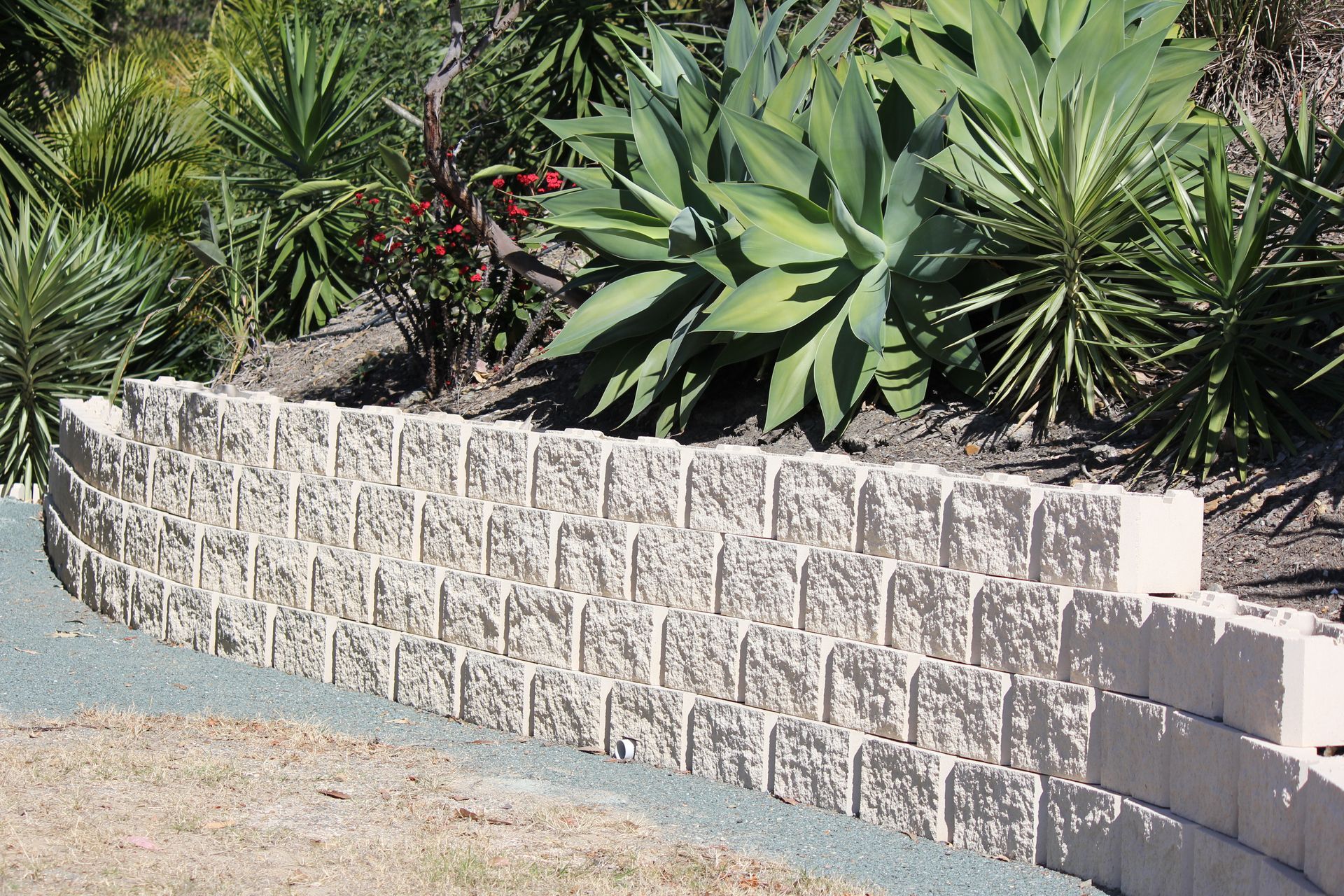
Slopes Stabilized for Landscape and Drainage
Retaining Walls in Alpharetta for erosion control and landscape support on sloped properties
Sloped properties throughout North Georgia communities lose soil to erosion after heavy rain, create unusable yard sections, and channel water toward foundations or paved areas where it pools or causes drainage failures. Retaining walls hold soil in place, create level terraces for planting or outdoor use, and direct water toward controlled drainage exits. Tuunich Exteriors builds retaining walls using stone, block, and decorative hardscape materials that provide structural stability while improving visual appeal across grade changes.
Retaining wall construction involves excavating to stable soil, setting a compacted base, and stacking materials with proper backfill and drainage systems that prevent water pressure from building behind the wall. Wall height, soil type, and slope angle determine whether reinforcement such as geogrid or deadman anchors is required to resist lateral pressure. Drainage planning includes weep holes, gravel backfill, and perforated pipe that redirect groundwater away from the wall structure.
Request a retaining wall evaluation to assess slope conditions and discuss material options suited to your property layout in Alpharetta, Johns Creek, Gainesville, and surrounding areas.
Why Retaining Wall Construction Works for Sloped Sites
Retaining walls function by resisting lateral soil pressure through structural mass, proper footing depth, and drainage systems that prevent hydrostatic pressure from destabilizing the wall. Stone and block materials are selected based on wall height, aesthetic goals, and how the wall integrates with surrounding landscape or hardscape features. Tiered walls on steep slopes distribute soil loads across multiple levels rather than concentrating pressure on a single structure.
After construction, sloped areas become stable terraces suitable for planting beds, lawn areas, or outdoor seating zones, and water no longer erodes soil or creates gullies that drain toward unwanted locations. Retaining walls frame landscape zones, define property edges, and create visual interest across elevation changes that previously limited yard usability.
Material choices affect wall appearance, structural capacity, and long-term maintenance—natural stone provides irregular, textured surfaces that blend with landscape plantings, while modular block systems offer consistent dimensions and faster installation for larger projects. Decorative cap stones finish the top course and provide seating edges where wall height permits.
Answers to Frequent Service Questions
Retaining wall construction addresses specific site conditions, so understanding what affects wall design and performance helps you evaluate options for sloped properties.
Tuunich Exteriors constructs retaining walls that stabilize slopes and improve yard usability while integrating with surrounding landscape features. Arrange a site evaluation to review grading conditions and material selections for your property in Alpharetta or a neighboring community.
What determines retaining wall height and structure?
Wall height depends on the slope angle, soil stability, and how much level area is needed above or below the wall. Walls exceeding certain heights require engineering to verify structural capacity and compliance with local building codes.
How does drainage affect retaining wall performance?
Drainage systems behind the wall—including gravel backfill, weep holes, and perforated pipe—prevent water from accumulating and creating pressure that pushes the wall forward. Poor drainage is the most common cause of retaining wall failure in Georgia's clay-heavy soils.
What materials are used for retaining walls in Alpharetta?
Natural stone, concrete block, and timber are common options, each offering different aesthetics and structural properties. Stone walls provide natural texture and color variation, while block systems offer uniform dimensions and faster installation for taller structures.
When should retaining walls be installed on sloped properties?
Installation is best scheduled during dry months when soil conditions allow for stable excavation and compaction. Completing walls before heavy spring rains prevents further erosion and allows for landscape planting once the structure is in place.
What landscaping works with retaining walls?
Planting beds above or below walls soften the structure's appearance and stabilize soil with root systems. Low-maintenance plants suited to Georgia's climate reduce irrigation needs and complement the wall's material and color.