
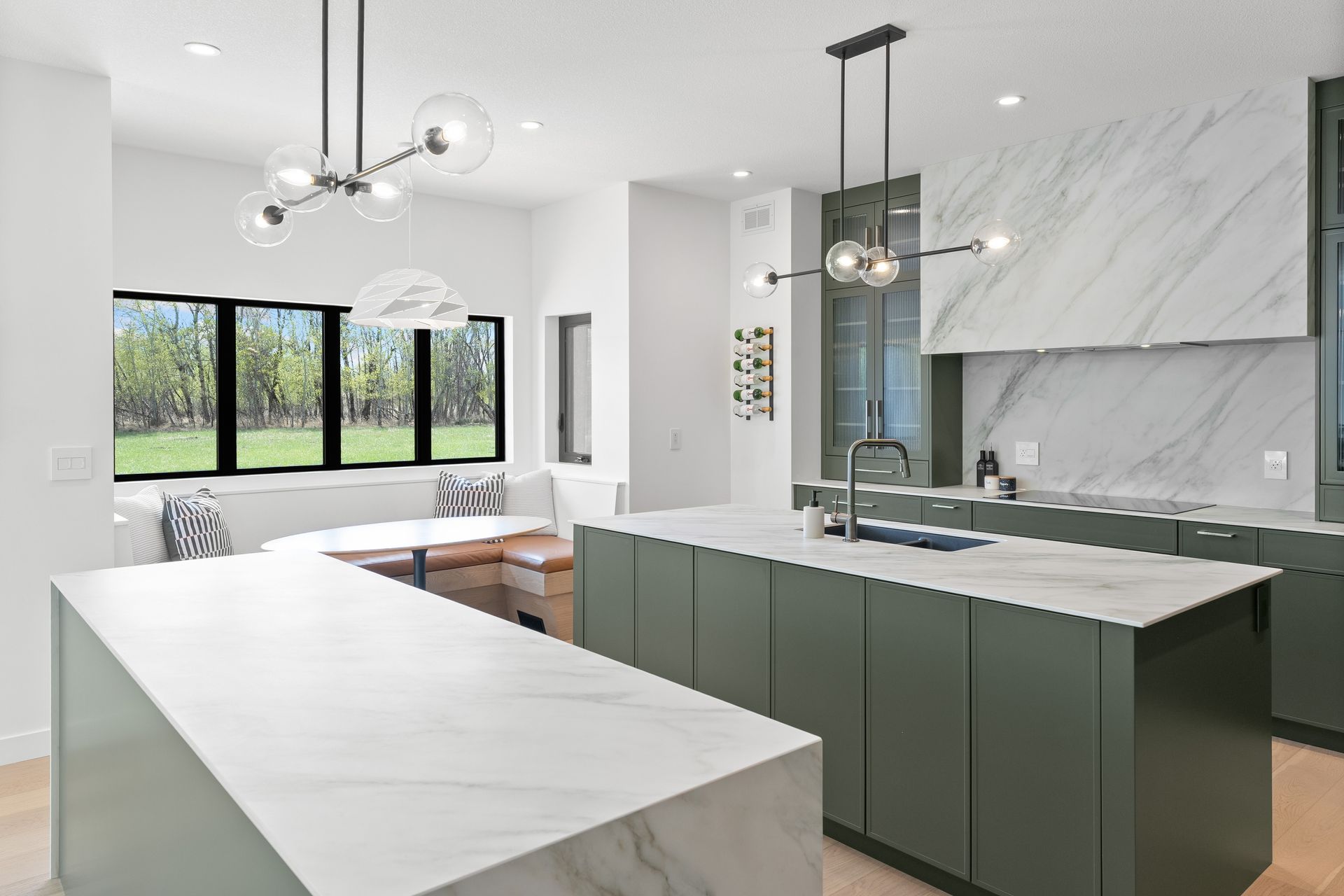
Spaces Built for How Families Actually Cook
Kitchen Remodeling in Alpharetta for homes where storage, workflow, and gathering space no longer support daily use
Tuunich provides kitchen remodeling designed around how your household prepares meals, stores equipment, and gathers throughout the day. The work addresses cramped layouts, insufficient counter area, outdated cabinetry that limits access, and lighting that makes food preparation difficult. Remodeling reconfigures these elements to match current routines and entertaining habits rather than preserving arrangements that no longer function.
Kitchen remodeling involves evaluating existing layout constraints, identifying traffic flow problems, and redesigning cabinetry placement, island configuration, countertop surfaces, and lighting zones to improve task visibility and movement efficiency. The process includes selecting materials that withstand daily use—durable countertops resistant to heat and moisture, flooring that handles foot traffic and spills, and cabinetry hardware built for repeated opening and closing.
Schedule a kitchen remodeling consultation to review your current layout and identify specific workflow improvements in Alpharetta, Cumming, Roswell, and surrounding areas.
What Proper Kitchen Remodeling Requires
Kitchen remodeling starts with measuring how you use the existing space—where congestion occurs during meal preparation, which storage areas go unused because of poor accessibility, and how natural and artificial light falls across work surfaces. This assessment determines whether the remodel focuses on cabinetry and surface upgrades within the existing footprint or requires layout changes that reposition appliances, sinks, and islands to create distinct zones for cooking, cleaning, and gathering.
After completion, you'll notice clearer pathways between the refrigerator, sink, and cooking surfaces that eliminate backtracking. Cabinets open fully without blocking adjacent drawers, countertops provide uninterrupted workspace near primary cooking areas, and task lighting illuminates cutting boards and stovetops without casting shadows. Islands function as both prep stations and informal seating areas, and updated flooring resists staining from spills that previously left permanent marks.
The remodeling process includes coordinating plumbing and electrical work when sinks or appliances move, patching and finishing walls after cabinetry removal, and ensuring new flooring transitions smoothly into adjacent rooms. Countertop materials are selected based on maintenance preferences—some surfaces require periodic sealing while others resist staining without treatment—and cabinetry depth is adjusted to maximize storage without protruding into walkways.
Questions Before Starting Your Project
Homeowners planning kitchen remodels often ask about timeline expectations, material durability, and how layout changes affect the rest of the home. These questions address practical concerns that shape remodeling decisions.
Tuunich coordinates all remodeling phases to minimize disruption while maintaining quality standards across cabinetry, countertops, lighting, and flooring installations. Request a detailed estimate to review layout options and material selections based on your household's daily routines.
What determines whether a kitchen layout should change or stay the same?
Layout changes make sense when the current arrangement creates bottlenecks during cooking, when multiple people cannot work simultaneously without colliding, or when the kitchen feels disconnected from adjacent living areas where family members gather. If the existing layout supports your workflow but surfaces and storage need updating, remodeling within the current footprint preserves functionality while refreshing appearance.
How do countertop materials differ in long-term performance?
Granite and quartz resist heat from pots placed directly on the surface and do not stain easily, though quartz requires no sealing while granite benefits from periodic treatment. Butcher block countertops provide warm texture and knife-friendly surfaces but require oiling to prevent drying and cracking. Laminate countertops offer budget-friendly options with improved durability compared to older versions, though they remain more susceptible to scratching and heat damage than stone alternatives.
What happens to the rest of the home during kitchen remodeling?
Dust barriers isolate the kitchen from adjacent rooms, and temporary pathways allow access to other areas without tracking debris. Contractors schedule demolition and dusty work in concentrated phases rather than spreading disruption across the entire project timeline. You'll need alternative meal preparation arrangements since the kitchen remains non-functional during portions of the remodel.
Why does cabinet quality vary so significantly in price?
Cabinet construction methods determine longevity and adjustability—plywood box construction with dovetail joints withstands decades of use and supports heavy dishware without sagging, while particleboard cabinets with stapled corners may loosen over time. Drawer glides rated for frequent use operate smoothly under load, and adjustable hinges allow doors to be realigned as the home settles. Higher-cost cabinetry typically includes these features as standard rather than optional upgrades.
When should kitchen remodeling happen relative to other home projects?
Kitchens generate the most household dust and require the longest access restrictions, so scheduling this work before refinishing adjacent living areas or installing new flooring in connected rooms prevents rework. However, if whole-home HVAC or electrical upgrades are planned, those should precede kitchen remodeling to avoid reopening finished walls.